


Post SVB crisis
For nearly three years, holding regional bank stocks felt less like investing and more like punishment.
Since the collapse of Silicon Valley Bank (SVB) in March 2023, Wall Street has treated the sector as un-investable. The prevailing narrative was one of inevitable decline: deposit flight was unstoppable, commercial real estate portfolios were ticking time bombs, and the regulatory environment was hostile. For thirty months, institutional capital fled mid-sized lenders in favor of the perceived safety of "Too Big to Fail" megabanks and the explosive growth of Big Tech.
But on January 15, 2026, the dynamic appears to have decisively shifted.
The SPDR S&P Regional Banking ETF (KRE) is currently testing a price ceiling that analysts view as significant: $70. This level has acted as resistance since the start of the SVB crisis. Breaking it would signal a end of the post-SVB era.
Market breadth
Investors have been desperately waiting for a signal to rotate capital out of the crowded technology trade. The "Magnificent Seven" stocks have driven market returns for years, but with valuations stretched and growth normalizing, portfolio managers are hunting for value. They are finding it in the foundational machinery of the economy: commercial loans, checking accounts, and net interest margins.
The Signal from Memphis
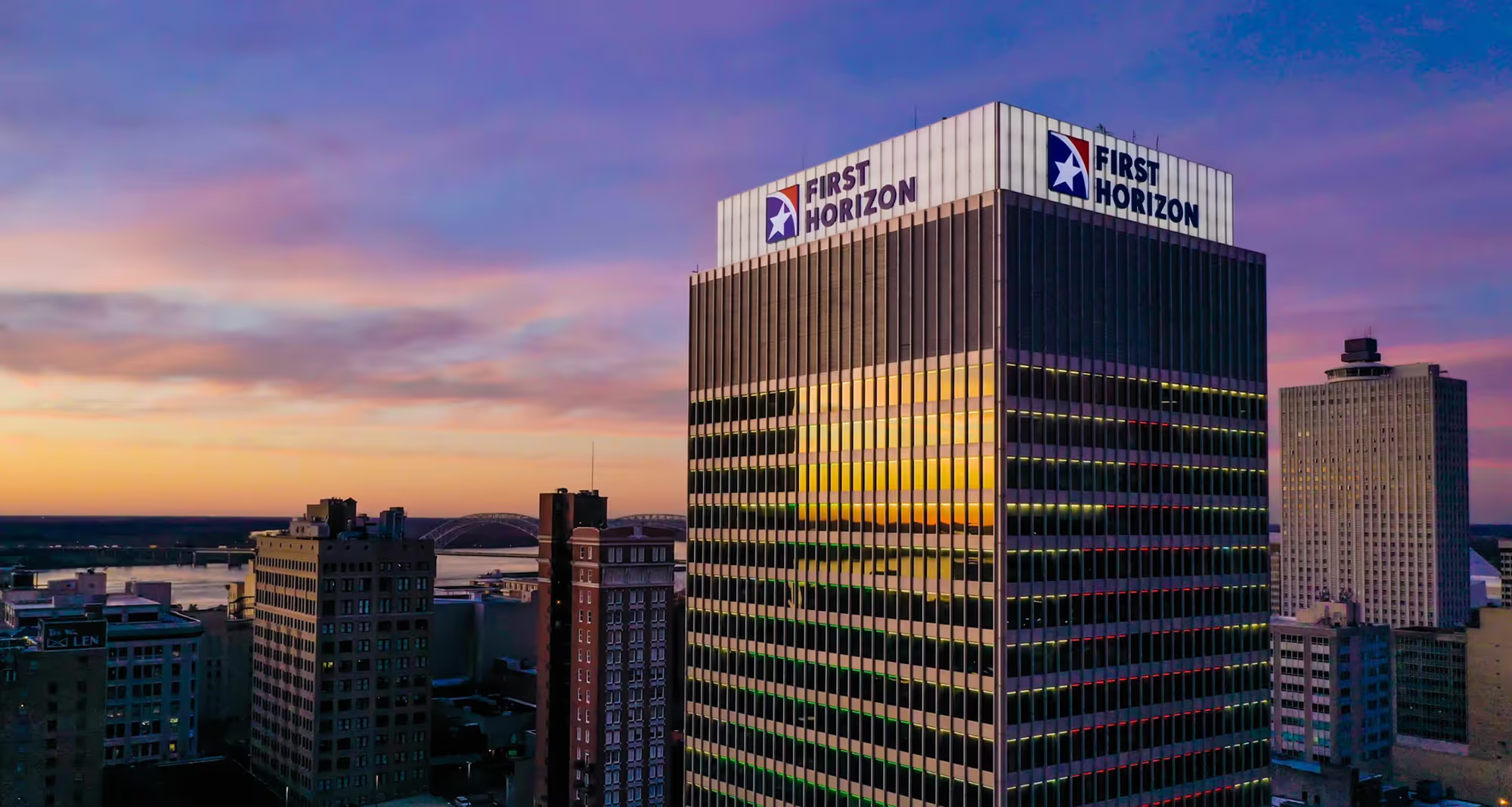
To understand why sentiment is turning from fear to opportunism, we look at First Horizon Corp. (FHN).
This morning, the Memphis-based lender delivered a clean beat. First Horizon reported earnings per share of $0.52, surpassing the consensus estimate of $0.47. Revenue reached $888M, driven by credit stability and diverse fee income. However, the headline number is the growth rate: First Horizon grew its full-year earnings per share by 38%.
This specific bank serves as a perfect proxy for the sector's rehabilitation. In 2023, First Horizon was the subject of a failed merger with TD Bank, a deal that collapsed under regulatory scrutiny, leaving FHN to survive on its own in a hostile market. Its ability to pivot, retain deposits, and now deliver double-digit growth is a confirmation for the entire industry.
The bank’s report dispelled two major bearish arguments:
- Credit quality held up better than expected, suggesting the feared wave of loan defaults has not materialized.
- Deposit costs have stabilized, meaning banks are no longer overpaying just to keep customers from fleeing to money market funds.
The "Soft Landing" fuel
The rally is driven by a convergence of three distinct macro-tailwinds that are finally aligning:
1. The Interest Rate Pivot With the Fed signaling rate stabilization, the pressure on bank balance sheets is easing. As bond yields fall, "unrealized losses" on bank books shrink, instantly improving capital ratios.
2. The Return of M&A Merger and acquisition activity, which froze completely in 2023 and 2024, is thawing. Regulatory clarity is encouraging mid-sized banks to combine. The logic is simple: scale. To compete with JPMorgan or Bank of America on digital banking and AI security, regional banks need deeper pockets. This necessity is turning the sector into a speculative treasure hunt.
3. The Boring Premium In 2026, with the economy slowing but not crashing, "boring" is an asset. Steady cash flow and dividend yields of 3% to 5% look attractive compared to volatile tech stocks.
The risks that remain
This is not to say the sector is risk-free. The shadow of Commercial Real Estate, particularly office space in metropolitan centers, still looms over regional balance sheets. However, the market reaction to First Horizon suggests that investors believe the worst-case scenarios have already been priced in. Banks have spent the last two years building reserves against these potential losses, hoping to insulate themselves from the shock.
The bottom line
Technical analysts are watching the $70 level on the KRE index closely. A clean break above this line could force a massive "re-rating" of the sector.
For years, algorithmic models and momentum funds have been underweight financials. If the trend reverses, these funds will be forced to chase the rally to rebalance their portfolios. We will track the catch-up trade as it develops.
Latest News
Insteel Industries (IIIN)
-
The manufacturer of steel wire reinforcing products reported strong Q1 results highlighted by Net sales of $159.9M, up 23.3% vs the prior year quarter. The increase in sales were primarily driven by higher prices.
-
Insteel is a bellwether for infrastructure and commercial construction activity. The sharp rise in sales and margins suggests infrastructure spending is increasing.
Viking Therapeutics (VKTX)
-
New filings reveal SG Americas Securities increased its position in VKTX by over 570% in the recent quarter.
-
The aggressive accumulation suggest a positioning for positive Phase 3 data or potential M&A activity in the obesity drug space.
Movers & Shakers
-
Critical Metals Corp (CRML) jumped over 30% yesterday. The miner is benefiting from a sudden spike in rare earth prices as geopolitical tensions threaten supply chains in Asia.
-
Trip.com (TCOM) slid 17% in pre-market trading. While bookings remain steady, the sell-off was triggered by news of an antitrust investigation by Chinese market regulators, spooking investors in the region's consumer discretionary sector.
-
Ventyx Biosciences (VTYX) soared after Eli Lilly agreed to acquire the company in an all-cash deal valued at $1.2 billion. The move underscores Big Pharma’s desperate hunt for new immunology assets to diversify beyond weight-loss drugs.
-
OneStream is going private. The corporate performance software company entered a merger agreement with Hg for $6.4 billion, signaling that private equity is still willing to write big checks for software cash flows.
-
OceanFirst Financial announced it would acquire Flushing Financial in an approximately $579 million all-stock deal, continuing the consolidation trend among mid-sized lenders.
Macro View
-
Oil Prices are ticking up again, with WTI Crude pushing past resistance. This is creating a tailwind for small-cap energy producers like HighPeak Energy, which gained 7% yesterday.
-
Iran Protests: Escalating civil unrest in Iran is adding a "risk premium" back into global markets, weighing slightly on international small-cap exposure.
Today's Fact
On January 15, 1967—exactly 59 years ago today—the Green Bay Packers played the Kansas City Chiefs in the very first Super Bowl (then called the AFL-NFL World Championship Game).
The face value of a ticket to see the game at the Los Angeles Memorial Coliseum was just $12.
Adjusted for inflation, that is about $116 in today's money. Even at that price, the game did not sell out, leaving 30,000 empty seats. Today, the average resale price for a Super Bowl ticket hovers around $9,000—representing a nominal price appreciation of roughly 74,900%. It remains one of the greatest missed arbitrage opportunities in sports history.
Thank you for your time this morning. I'll be back tomorrow with another edition. -Marques
Sign up here to get this newsletter in your inbox. Reach our team at marques@blankcapitalresearch.com


